Is Riding A Cable Car Free?
No, a cable car ride in San Francisco costs $9.00 for a single ride, but the Cable Car Museum is free and the Powell Street terminal area is free to explore. Here is the full breakdown.
In Short
No, riding a cable car in San Francisco is not free. A single ride costs $9.00, with no transfers, and children 4 and under ride free. The free part of the cable car story is the Cable Car Museum, which charges no admission and lets you watch the winding wheels that pull the cables. The terminals and turntables at Powell Street are also free to watch.
This question sits inside the San Francisco On A Budget guide.
Quick Facts
| Question | Answer |
|---|---|
| Is the cable car ride free? | No, a single ride is $9.00 |
| Are transfers included? | No, a single-ride ticket carries no transfers |
| Do young children pay? | Children 4 and under ride free |
| Where do you buy the fare? | Before boarding, at Powell, Bay and Hyde terminals, 8 am to 5 pm |
| Is the Cable Car Museum free? | Yes, admission is free |
| What costs money at the museum? | Only the gift shop |
| Do SF youth ride the cable car free? | No, the Free Muni for Youth program excludes cable cars |
Is Riding A Cable Car Free?
No, riding a cable car in San Francisco is not free. A single ride costs $9.00, the ticket carries no transfers, and the fare must be bought before boarding at the Powell, Bay and Hyde terminals between 8 am and 5 pm. Children 4 and under ride free. The genuinely free cable car experience is the Cable Car Museum, which charges no admission and shows you the winding wheels that pull the cables.
The $9.00 figure comes straight from the San Francisco Municipal Transportation Agency, the agency that runs the system, and it is the only price a visitor needs to remember. There is no discount window, no free riding period and no viewing-only fare. If you step on board, you pay, and if you want to ride again after hopping off, that is a second $9.00. The fare is charged per ride, not per day, which surprises people who assume it works like a bus pass.
The payment rule is the part that catches the most visitors out. SFMTA requires the single-ride fare to be bought before boarding, at the Powell, Bay and Hyde terminals, and the ticket booths there operate 8 am to 5 pm. If you join a car mid-route outside those hours and locations, you are still responsible for the fare on board. Planning the boarding point around a terminal makes the whole transaction simpler, and the Powell Street terminal sits right in the downtown core where most visitors already are.
There is one group with a real fare break, and one common misunderstanding about another. Children 4 and under ride free on the cable car. San Francisco residents aged 18 and under ride Muni free with a Free Muni for Youth Clipper card, but that program expressly excludes cable cars, so a visiting teenager still pays the full $9.00. That exclusion is stated on the SFMTA cable car single-ride fare page, which is the page to check before assuming any discount applies.
| Place | Free Or Ticketed | What Is Free | What You Still Pay For |
|---|---|---|---|
| Cable Car Museum | Free | Free admission; you watch the winding wheels that pull the cables. | Gift shop only. The ride itself costs $9. |
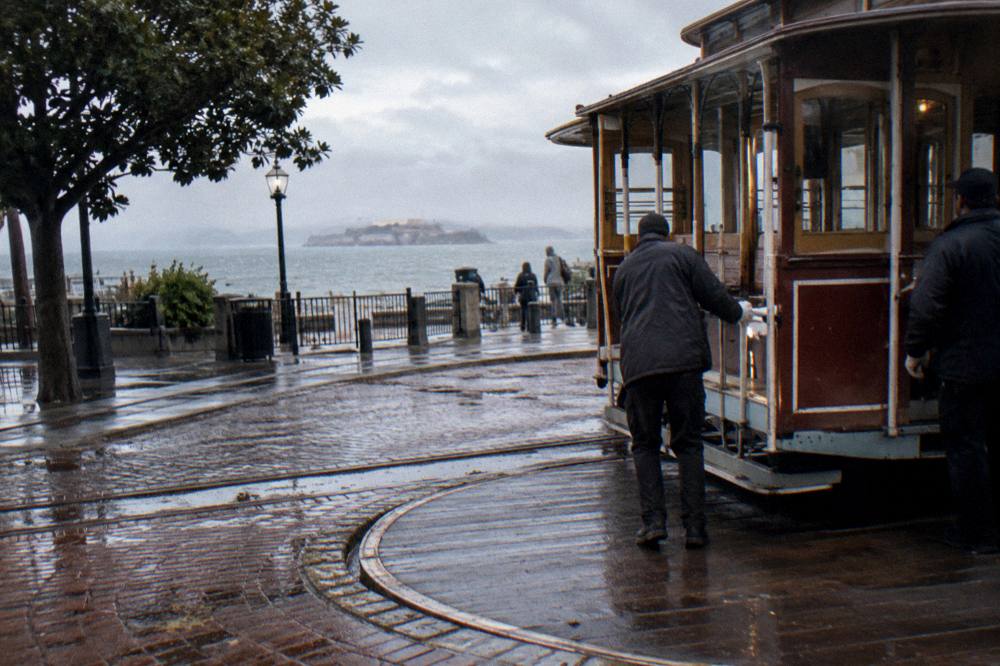
So the honest framing is this: the ride is paid, the machine room is free, and the street theatre around the turntables is free. Many visitors find that watching a crew physically rotate a cable car by hand at the Powell Street turntable delivers most of the spectacle for nothing, and that the museum a short ride away delivers the engineering story the ride itself never explains. Both halves sit in the same neighborhood, which makes the paid-and-free split easy to plan in one morning.
If the $9.00 gives you pause, the downtown area has a set of free, pay what you want walking tours that cover the same streets on foot, and the strongest of them are listed below. Each one is run by an independent local guide on GuruWalk or freetour.com, and every one of the 13 free walking tours in this city's roster costs nothing to reserve.
What Does The Free Part Include?
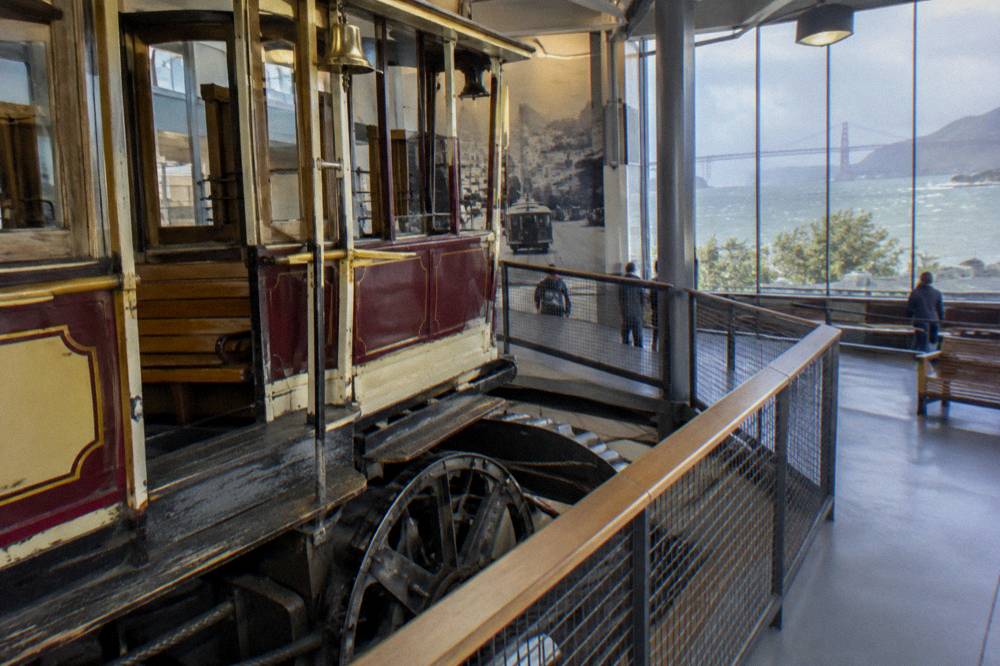
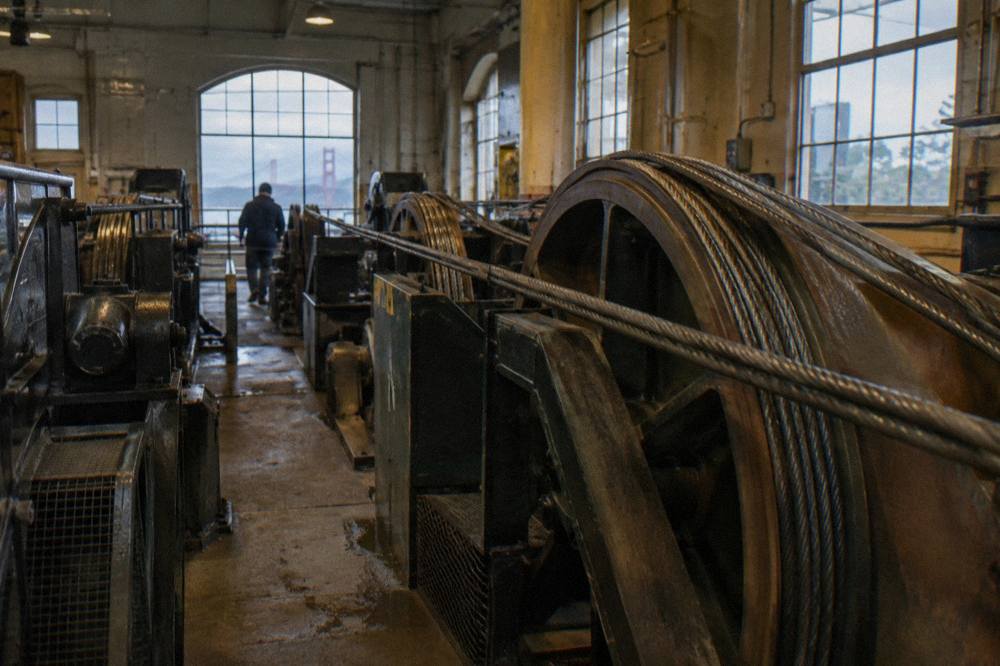
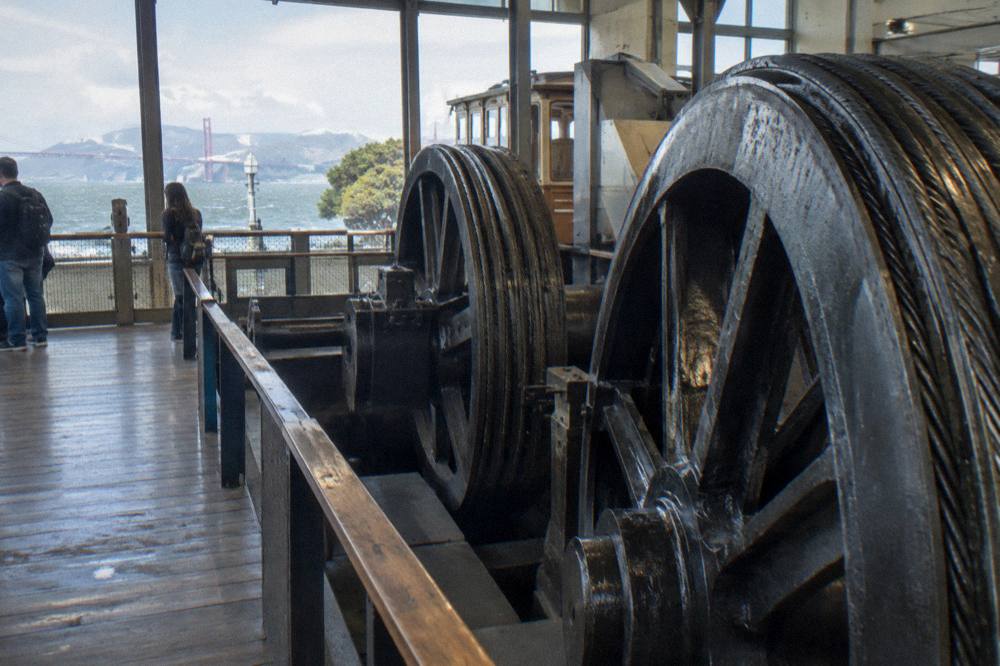
The free part is the Cable Car Museum, which charges no admission and stays open as a working machine house. Inside, you watch the winding wheels that pull the cables under the streets, see historic cable cars on display, and look down on the sheaves from a viewing mezzanine. The gift shop is the only thing inside that takes money. Everything else costs nothing to see.
The museum is not a reconstruction or a souvenir hall. It occupies the Washington and Mason cable car barn and powerhouse, which means the machinery on display is the live system: the same wheels that grip and release the cables running beneath Powell, Mason, Hyde and California streets are turning in front of you as the cars circulate above. The museum's own page states it plainly, admission is free, per the Cable Car Museum site. You walk in, you look at the wheels, you pay nothing.
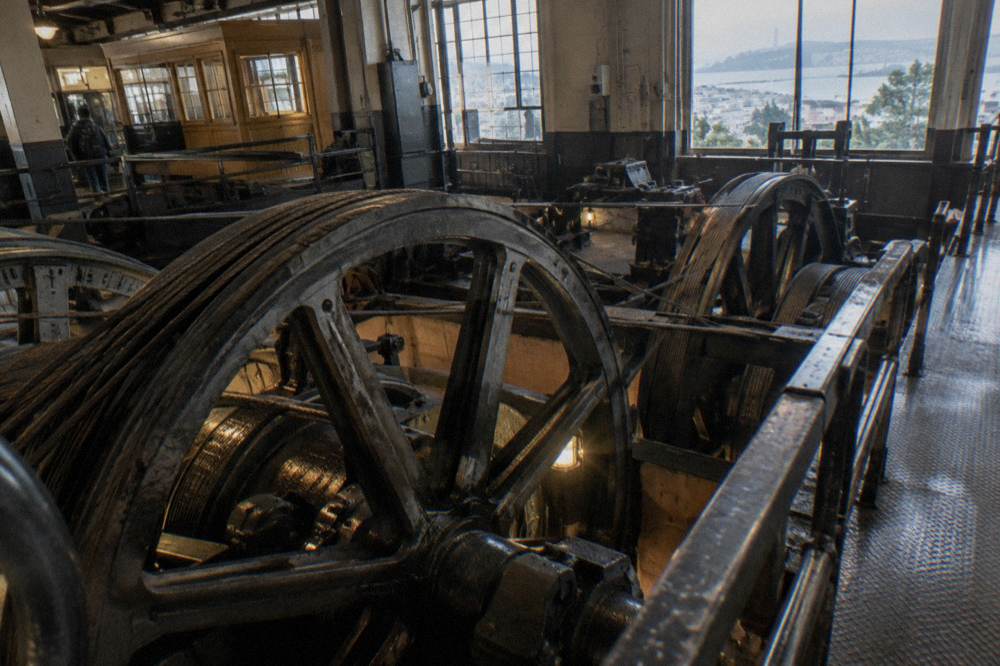
Beyond the winding room, the free scope covers the historic cars on the ground floor and the viewing mezzanine over the sheaves and haul ropes. For a lot of visitors this is the moment the whole system finally makes sense: a cable car does not carry an engine. It grips a continuously moving cable buried in a slot between the rails, and the gripman releases and re-grips that cable to stop and start. Seeing the cable itself, moving at constant speed under the floor, is what turns an expensive novelty ride into an understandable piece of engineering.
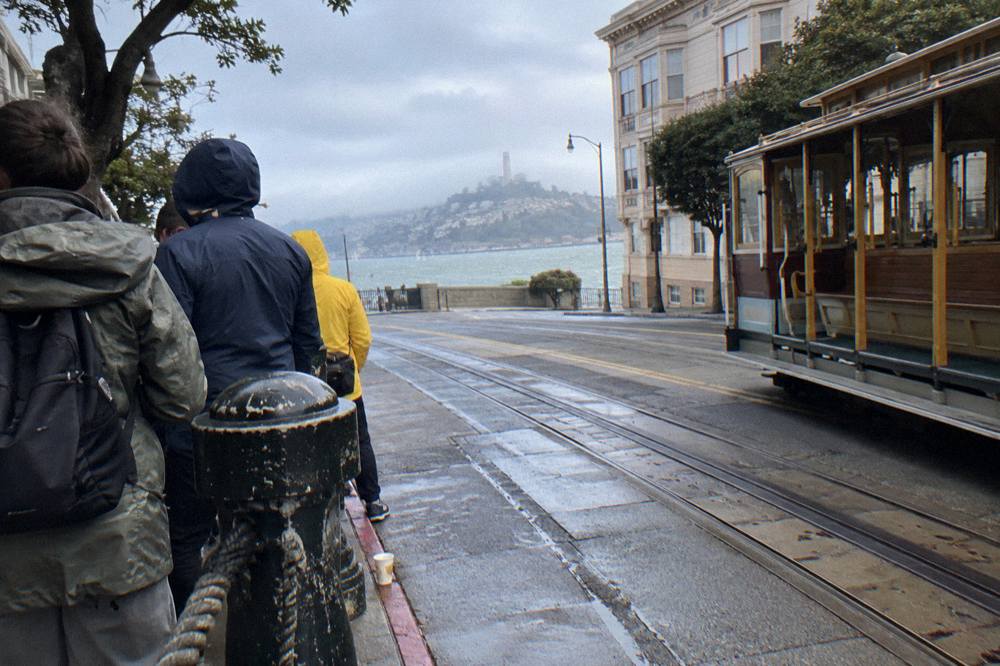
The free experience also extends outside the museum walls. The terminals at Powell Street, where the crews turn the cars on a rotating platform by muscle, are public street corners. Standing there costs nothing. The cars themselves rumble past on public streets, and photographing them, following them a block, or simply standing at the turntable while a crew spins a car around is free in a way the ride is not.
Free And Paid Places In North Beach And Telegraph Hill
- Free, no ticket
- 6
- Ticketed
- 2
It is worth being precise about what "free" attaches to here, because the museum and the ride are two separate facts that get merged into one wrong sentence. The Cable Car Museum is free, full stop, no conditions, no hours-based free window. The ride is $9.00, full stop, no free window either. Neither fact changes with the season, the day of the week or the hour, which is unusual in a city where so many attractions are conditionally free. For a fuller map of which museums are free when, the San Francisco Free Museum Days guide lists the monthly free windows across the city.
What Do You Still Have To Pay For?
You pay $9.00 for a single cable car ride, and that ticket includes no transfers, so a second ride is a second $9.00. The fare must be bought before boarding at the Powell, Bay and Hyde terminals, 8 am to 5 pm. Children 4 and under are the only riders who board free. At the museum, the gift shop is the only paid element. Every other cost is a choice, not a fare.
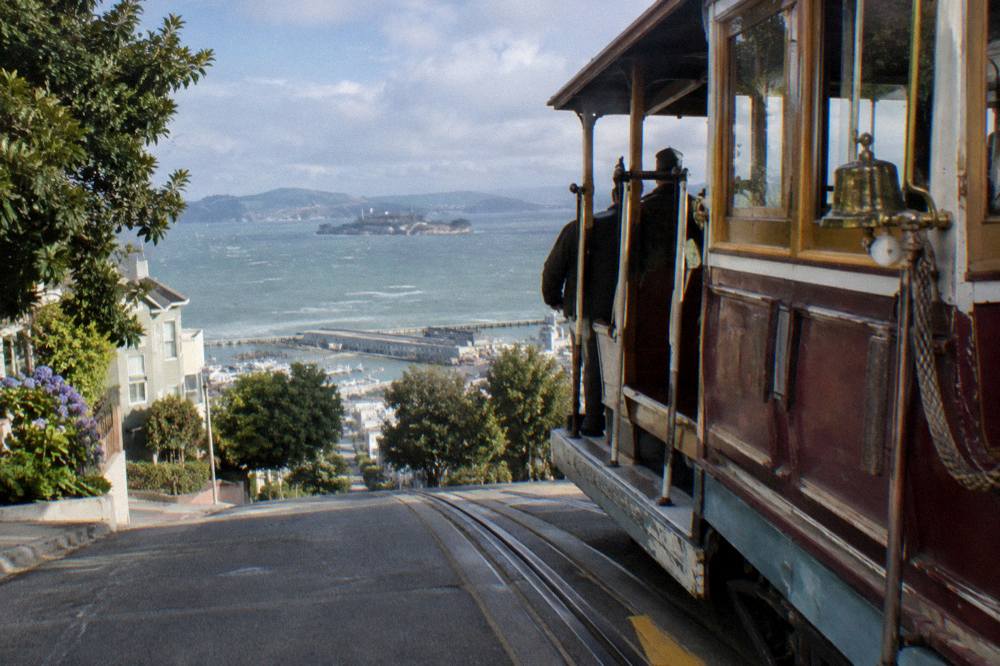
The no-transfers rule is the budget breaker. A visitor who rides from Powell Street toward Fisherman's Wharf, hops off for photos, and rides again ten minutes later has paid twice, once per ride. The fare buys a single ride only, with no day pass and no transfer credit between cars or to other transit. If the goal is the experience rather than the transport, one ride, taken once, deliberately, is the whole purchase. Deciding the direction and the boarding point before you pay is what keeps the cost at a single fare.
The paid-versus-free split is cleanest in a table, because the cable car experience is really two attractions sharing a name:
| Element | Free or paid | Detail |
|---|---|---|
| Single cable car ride | Paid | $9.00, no transfers |
| Children 4 and under | Free | Board without a fare |
| SF youth on cable cars | Paid | Free Muni for Youth excludes cable cars |
| Fare purchase | Before boarding | Powell, Bay and Hyde terminals, 8 am to 5 pm |
| Cable Car Museum entry | Free | No admission charge |
| Museum gift shop | Paid | Souvenirs only |
| Watching the Powell Street turntable | Free | Public street corner |
Beyond the fare and the gift shop, the other costs are incidental: food near the wharf end of the line, souvenirs, anything you buy because you stepped off the car in a shopping district. The ride itself has no upsell once you hold the ticket. That makes the cable car one of the more predictable paid experiences in a city where the big attractions, Alcatraz from $47.95 with the official ferry provider, or the Exploratorium at $39.95 for adults, run much higher. If the budget question is broader than one ride, the Free Vs Paid San Francisco Sights guide lays out the full split across the city.
When Is The Free Option Available?
The Cable Car Museum is free during all of its opening hours; there is no free window, no first Tuesday and no free day, because the museum never charges admission at all. The $9.00 ride likewise has no discount hours. The only time-dependent rule that matters is the fare booths, which sell the pre-boarding ticket at Powell, Bay and Hyde terminals from 8 am to 5 pm.
“David provided a phenomenal tour. He is so knowledgeable and shares history that will make you think. He is also gracious. The tour involves walking and hills. One guest in our group had some mobility challenges, but David was patient throughout.”
Michelle Cooper, GuruWalk review of Villains And Revolutionaries Walk
This simplicity is rarer than it sounds. Much of San Francisco's free landscape is conditional: the Japanese Tea Garden is free only Monday, Wednesday and Friday from 9 to 10 am, the Conservatory of Flowers is free only on the first Tuesday of the month, the de Young and the Legion of Honor open their permanent collections free from 4:30 pm. The cable car pair is different. The museum is free always, and the ride is paid always, so the decision is about preference and budget, not about catching a window.
The practical implication is scheduling freedom. You do not need to build your morning around a free hour or a monthly free day. If you want the museum only, any opening day works. A cable car ride is paid, fare booth hours at the terminals end at 5 pm, and the museum itself costs nothing to enter. The museum's exact days and hours are on its own page; unlike the conditional attractions, nothing about the free status changes with the calendar.
The ride's timing question is purely about the fare purchase. The pre-boarding rule applies at the terminals between 8 am and 5 pm. Outside those hours, or away from those terminals, the fare is settled on board, and the price does not change. There is no early-morning discount, no evening rate and no cheaper direction of travel: the ride down the hill costs exactly what the ride up the hill costs.
One note that affects planning more than price: the Powell Street cable car terminal sits at Union Square, in downtown San Francisco. Just the fare facts and ride conditions for the cable car, nothing more. The SF SPCA holiday windows at Macy's Union Square run 20 November to 31 December, Wednesday to Sunday, noon to 5 pm, closed 26 November and 25 December, placing another free spectacle within the same few blocks as the terminal.
Where Does The Free Visit Start?
The free visit starts at the Cable Car Museum at the corner of Washington and Mason, which is also the working barn and powerhouse for the whole system. The Powell Street cable car terminal at Powell and Market Streets is the paid system's hub, and the walk between the terminal area and the museum is a few blocks uphill. Watching the turntable at Powell Street costs nothing and needs no starting point beyond the corner itself.
The geography matters because the two halves of the experience sit close together. The Powell and Market terminal is where the cars turn on the rotating platform and where the fare booths operate. The museum sits a short distance up Mason Street, in the powerhouse itself. A visitor who pays for one ride can board downtown and ride toward the wharf, or skip the ride, walk to the museum, and see the machinery that makes the whole thing move.
The free alternative starting points cluster in the same neighborhood. Union Square is an open public plaza, free at any hour. The Chinatown Dragon Gate on Grant Avenue is free to walk through. City Lights Booksellers is open daily 10 am to 10 pm and free to browse. All of these sit within the same downtown rectangle as the cable car terminal, which means a no-spend afternoon downtown is easy to assemble: turntable watching, the museum, the plaza, the gate, the bookshop.
That is also where the free walking tours converge. The walks in this city's roster meet at named downtown points: the Original English Free Tour meets at Union Square, corner of Post and Powell Streets, and is listed on freetour.com. The Elevated Garden Story Walk meets at Post and Powell Streets as well. The Free One-Day Overview Walk, a GuruWalk walk rated 4.94 out of 5 across 576 GuruWalk reviews, meets at the Swarovski store, 246 Powell Street, two blocks from the turntable. If the $9.00 ride is off the budget, a free, pay what you want walk through the same streets starts closer than you might expect.
The Free Walking Tours In San Francisco guide carries the full roster of 13 free walking tours across GuruWalk and freetour.com, with meeting points and durations for each. This article links one of them directly below, the one whose meeting point shares a neighborhood with the cable car terminal itself.
The Free One-Day Overview Walk runs 2 hours 15 minutes in English, is listed on GuruWalk, and costs nothing to reserve: free, pay what you want, with the guide tipped at the walker's discretion at the end.
The wider point for a budget traveller is that the cable car's neighborhood, downtown, Union Square and Chinatown, is dense with genuinely free things. The museum anchors the cable car half of it, and the walking tours anchor the street-level half, and both start from points within a few blocks of each other.
Which Free Walking Tours Cover This?
The free walking tours that share this neighborhood include the Free One-Day Overview Walk, meeting at the Swarovski store, 246 Powell Street, and the Elevated Garden Story Walk, meeting at Post and Powell Streets, both on GuruWalk, plus the Original English Free Tour on freetour.com, meeting at Union Square, corner of Post and Powell Streets. They are walking tours, free and pay what you want, reserved on their platforms, not cable car rides.
The clearest way to see the overlap is by meeting point, because every walk in the roster is introduced by its platform, guide, meeting point and neighborhood, and several of them start within sight of the Powell Street terminal:
| Walk | Platform | Meeting point | Duration |
|---|---|---|---|
| Free One-Day Overview Walk | GuruWalk | Swarovski store, 246 Powell Street | 2 hours 15 minutes |
| Elevated Garden Story Walk | GuruWalk | Post and Powell Streets | 2 hours 30 minutes |
| Original English Free Tour | freetour.com | Union Square, corner of Post and Powell Streets | 2 hours |
The Original English Free Tour is rated 9.5 out of 10 across 1,354 reviews shown on its freetour.com listing, and the Elevated Garden Story Walk is rated 4.96 out of 5 across 52 GuruWalk reviews. The ratings are on different scales, out of 10 on freetour.com and out of 5 on GuruWalk, so they are printed as each platform reports them and never converted. The Free One-Day Overview Walk, 4.94 out of 5 across 576 GuruWalk reviews, is the walk this site features most often for downtown, precisely because its meeting point sits in the middle of the neighborhood a cable car visitor is already standing in.
What none of these walks does is replace or include the ride itself. They are on foot, they take around two hours, and they are free, pay what you want. The $9.00 cable car fare buys transport and a view from the rail; the walks buy two hours of a guide's commentary through the same streets for nothing up front. A single cable car ride is $9.00, and walking downtown after that costs nothing. Others do the museum and a walk and spend nothing at all.
“A very interesting tour about the gold rush the ships and places of interest in San Francisco”
Wendy, GuruWalk review of Free One-Day Overview Walk
Beyond downtown, the roster spreads across the city's neighborhoods, from the Gold Rush and Barbary Coast walks meeting at 312 Mason Street, also downtown-adjacent, to the Hidden Stairways Walk meeting at the Hidden Garden Steps, 16th Avenue. Every one of them is free, pay what you want, and reserved on GuruWalk or freetour.com. The site's owner, Free Things To Do In San Francisco, operates none of them: each belongs to an independent local guide, and every reservation happens on the walk's own listing.
Walks from other neighborhoods round out the picture below, all on GuruWalk and all free, pay what you want. The Haight Ashbury Bohemian Past walk, rated 4.99 out of 5 across 83 GuruWalk reviews, meets at 1300 Haight Street. The Villains And Revolutionaries Walk, rated 4.65 out of 5 across 20 GuruWalk reviews, meets at 312 Mason Street, a short distance from the cable car barn. The Civic Center Short Walk, 1 hour 45 minutes in English, meets at 1182 Market Street.
Mistakes That Trip People Up At The Cable Car
The four common mistakes are assuming the ride is free, assuming the $9.00 ticket transfers to a second car, boarding away from a terminal without realising the pre-boarding fare rule, and skipping the free museum because the word "museum" sounds paid. Each mistake costs either a fare or a free experience. The fare facts are fixed: $9.00 single ride, no transfers, children 4 and under free, museum admission free.
The first mistake is the article's own question answered wrong. Visitors sometimes conflate the cable car with the city's free, pay what you want walking tours, or assume that because the museum is free, the ride must be too. The ride is $9.00. The museum is free. Holding those two facts separately is the entire budget lesson on cable cars.
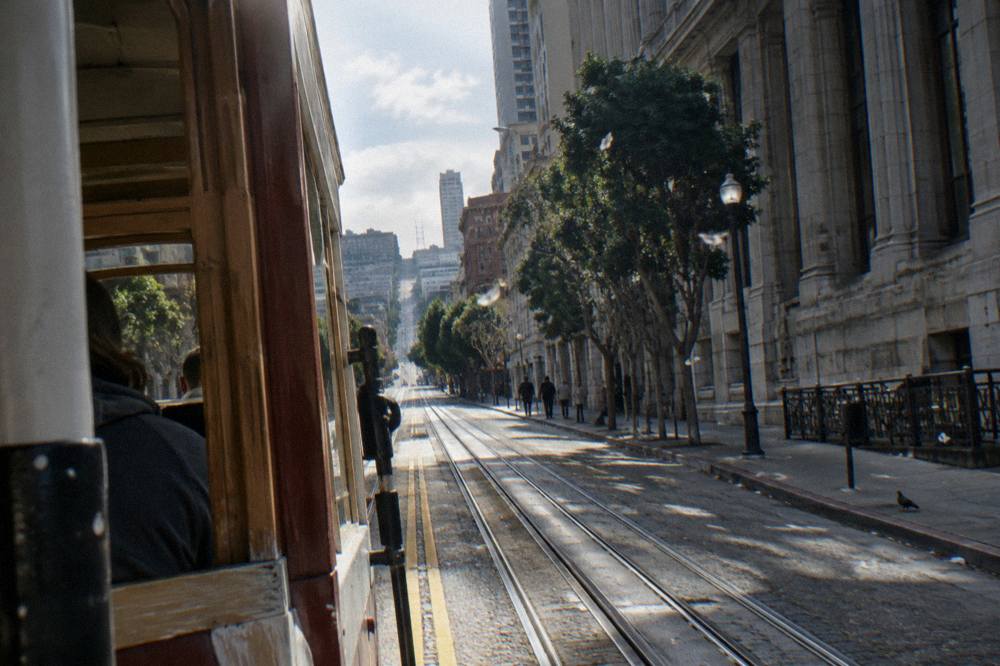
The second mistake is the double-ride. Because there are no transfers, a family that hops off for photos and reboards has paid twice over, once per rider per ride. The fix is to choose the one ride that matters and treat everything else as walking. The downtown core is walkable, the free tours cover it on foot, and the terminals themselves are spectacles you can stand at for nothing.
The third is the fare purchase. The SFMTA rule puts ticket sales before boarding at the Powell, Bay and Hyde terminals, 8 am to 5 pm. Visitors who board mid-line expecting to buy a ticket at a machine the way they would on a bus find the transaction handled differently. Budget the few minutes at the terminal, or accept settling on board, but do not expect the terminal-booth routine to follow you down the line.
The fourth mistake is paying for spectacle when the free version is a block away. The Cable Car Museum shows the actual winding wheels, the Powell Street turntable shows the actual crews spinning the cars, and both cost nothing. A visitor who watches the turntable, walks to the museum, and finishes at Union Square has had the complete cable car afternoon for nothing at all. The $9.00 ride is a fine purchase, but it is a purchase, and treating it as one is what keeps a San Francisco budget intact.
Common Questions On This Topic
Is Riding A Cable Car Free?
No. A single cable car ride costs $9.00, and the ticket includes no transfers. Children 4 and under are the only riders who board without paying. The fare must be bought before boarding at the Powell, Bay and Hyde terminals between 8 am and 5 pm. The free part of the cable car story is the Cable Car Museum, which never charges admission.
How Much Is A Cable Car Ride In San Francisco?
A single ride is $9.00, with no transfers between cars or to other transit. A second ride later in the day is a second $9.00 fare. The price is set by the SFMTA and applies at every hour the cars run, with no discount window. Children 4 and under ride free, and no youth exemption applies to cable cars.
Is The Cable Car Museum Really Free?
Yes. The Cable Car Museum charges no admission at any time, on any day it is open. It sits inside the Washington and Mason powerhouse, so the winding wheels that pull the cables under the streets are working machinery, not a display copy. The gift shop is the only thing inside that takes money, and skipping it costs you nothing.
Where Do You Buy A Cable Car Ticket?
The single-ride fare must be bought before boarding at the Powell, Bay and Hyde terminals, where the booths operate 8 am to 5 pm. Boarding away from those terminals, or outside those hours, means settling the fare on board instead. The price does not change either way. The Powell and Market terminal is the one most downtown visitors use.
Do Kids Ride The Cable Car Free?
Children 4 and under ride free. San Francisco residents aged 18 and under ride Muni free with a Free Muni for Youth Clipper card, but that program expressly excludes cable cars, so visiting teenagers pay the full fare. There is no other child or youth discount on the single-ride price. Families should budget one $9.00 fare per rider aged 5 and up.
Can You See The Cable Cars Without Paying?
Yes, three ways cost nothing. The Powell Street turntable, where crews rotate the cars by hand, is a public corner. The Cable Car Museum shows the live winding wheels for free. And the cars themselves run through public streets you can photograph and follow on foot. Only stepping aboard triggers the $9.00 fare.